cara agar cepat hamil weigh loss factor : Januari 2013

Kamis, 31 Januari 2013

Up Goer Five and the Rhetoric of Science

Recently, the webcomic xkcd spurred some discussion with a description of the Saturn V rocket that managed to use only the thousand (or "ten-hundred") most common English words. Entitled "Up Goer Five," the strip provided a jargon-free explanation of rocket architecture and sparked a bit of reflection about the role of technical language in science and its wider dissemination.

Detail from "Up Goer Five" (http://xkcd.com/1133/)
In that sense, Up Goer Five is a bit like #overlyhonestmethods, which I covered here. Both highlight the possibilities (and pitfalls) of effective science communication, and both provide interesting opportunities for meditating on what role (if any) the social study of science might play in that process, and how such analysis fits with scientists' own public self-reflection.
The phenomenon really took off with (1) Theo Sanderson's web-based text editor (that spell-checks every word you type against the ten-hundred commonest words) and (2) a challenge from a pair of geoscientists, aimed at other scientists, to translate their research abstracts using the editor and tweet them or post them in the comments.

So many scientists took up the challenge that the pair started a Tumblr for the responses, called Ten Hundred Words of Science, that now has hundreds of posts. To give you a taste of what they're like at their best, here's an attempt (by Chris Rowan, one of the original pair who blogged about Up Goer Five here) to explain paleomagnetism and plate tectonics—without using the word "magnet":

Source: http://tenhundredwordsofscience.tumblr.com/post/40810916778/i-study-what-rocks-tell-us-about-how-the-ground
Pretty good, right? Of course, the posts vary in quality and clarity. Depending on the jargon in your field, you might be forced to swap in some pretty gnarly syntax, which can be less clear than straightforward conceptual explanations would be. Still, many are excellent—humorous, to be sure, but clear and evocative, too. 

As with #overlyhonestmethods, coverage of #upgoerfive has been steady, including highlight reelspolitical gagsan attempt at sportswriting, and a translation of the last paragraph in The Origin of Species (not a great example, IMHO). Bloggers at The Guardian and The Chronicle have weighed in, and people are having fun, including yours truly (here's my own #upgoerfive abstract). 

And, once again, scientists' public procrastination furnishes an opportunity for thinking about how the way we talk about science links up with how we do it (not to mention what (and who) it's for). Randall Munroe (the guy behind xkcd) seems to agree, as we can see from another cartoon he drew (this time on "Simple Wikipedia—which, if you haven't seen, you check it out!). If you hold your cursor over the cartoon, you get an elaboration that's quite revealing:

Source: http://xkcd.com/547/
As with so much Munroe does, its a superb blend of the absurd and the astute. What's at issue is how the language in which we conduct and communicate science—though essential—can be a handicap both to public understanding and to scientists' own abilities to work out problems together. How much this hits home will depend on the area you're talking about, of course, but there's a certain truth to how technical terminology can impede—rather than expedite—collaboration, especially across subfields. 

Up Goer Five has, unsurprisingly, produced two main (often competing) interpretations. While some—including a Popular Science blogger—see the exercise as a defense of jargon, others—including those original geoscientists—see it as a valuable exercise in both science communication and conceptual reorientation. For its champions, the value comes when you "move beyond the straight replacement of forbidden words and seek to recast the concept you’re trying to explain." 

This seems right to me. One problem with the literature on the "rhetoric of science" (at least what I've seen of it) is that, in accounting for how experimental reports are written, it too often leaves out or mischaracterizes the experimental nature of the writing process itself. Words are chosen to express experimental results, they say, but I think we might better see that process as part of the experiment itself, not a separate rhetorical act (creative as it might be). 

Take Charles Bazerman's classic, Shaping Written Knowledge (available online here). Though he emphasizes the "intelligent responsiveness to complex pressures" and "fortunate concatenations of events" (14) of experimental reports, rhetoric remains  "the study of how people use language and other symbols to realize human goals and carry out human activities" (6ff). People have aims, scientists have results, and they use symbols (bounded by complex pressures) to express them. 

But what if it's true—and it must be—that word choice and concept formation feed back on one another, that experiments spread from the bench to the desk to the bar and back? Then those of us who study how science works probably want a better way to account for how deeply "experimental" it is, a way that doesn't divide experiments with molecules from experiments with words.

Of course, historians and sociologists of science have hatched a few ways of doing this. But Up Goer Five got me thinking that the "rhetoric of science" approach (which peaked in the late-1980s) could use a reboot, albeit one that got beyond (or re-imagined) both the classical rhetorical analyses and the evolutionary data-mining that framed those earlier efforts. 

Sabtu, 26 Januari 2013

Silver Linings and the Statistical Playbook


We asked historian of science Christopher J. Phillips, an expert on quantification in American public life, to reflect on the role of statistics—and Nate Silver—in the coverage of the 2012 election. He was kind enough to write us the following guest post; you can find out more about his work here.

The 2012 election was a "Moneyball Election" and Nate Silver its big winner. Or so proclaimed the New Yorker's Adam Gopnik.  He was certainly not alone. Deadspin's David Roher lamented the "braying idiots" detracting from Silver's well-deserved limelight; President Obama jokingly praised Silver for having "nailed" the prediction of this year's Thanksgiving Turkey; and Wired's Angela Watercutter perhaps gave the ultimate compliment by calling Silver a "Nerdy Chuck Norris." 

Silver, for anyone who has spent the last few years under a rock, is the creator of the (mostly) political blog FiveThirtyEight. Picked up by the "New York Times" just before the 2010 midterm elections, FiveThirtyEight has become one of the go-to sites for political junkies.

Source: https://pbs.twimg.com/media/A7Cbu_ZCQAE0m6o.jpg:large
An unlikely fate, to be sure, for an unknown consultant at the accounting firm KPMG a decade earlier. Silver tells it as an ersatz rags to riches story, a bored employee and mediocre online poker player who designed a model for evaluating baseball players and then took on the pundits—mainly because in both baseball and politics the majority of "experts" knew close to nothing. 

This account is too modest on the one hand—his evaluative system for baseball, PECOTA, became one of the central predictive tools of the respected Baseball Prospectus operation. On the other, it overstates his statistical creativity—his overwhelming contribution has been to introduce clearer measures of confidence to poll predictions. As he explained to new readers in 2010, his blog was "devoted to...rational analysis" and "prioritize[s] objective information over subjective information." Hardly a revolutionary statistical approach.

Notwithstanding these pedestrian goals, his message has certainly struck a chord. His 2012 book, The Signal and the Noise: Why So Many Predictions Fail—But Some Don't, was perfectly timed to capture the election-season hype and indeed is still on the "New York Times" bestseller list. Few books could possibly be blurbed by both Bill James (of "Moneyball" fame) and Peter Orszag (of perhaps lesser O.M.B. fame). Silver has, in effect, become a hero to thinking folks everywhere (particularly those with only passing statistical knowledge), who happily point to his columns as if to say to the unwashed masses, "I told you so."

But what does this ascendance of "rational" thinking represent? For one thing, it is not about the spread of statistical knowledge. Silver himself almost never fully explains the mathematics behind the models he uses. While he is footnote-happy in his book, he doesn't include any notes or appendices which would begin to teach others how to use the basic statistical concepts he deploys like regression to the mean, probability distributions, or the "nearest neighbor" algorithm. 

That's hardly criticism—each equation in a book is rumored to reduce readership, although to my knowledge no one's ever done the formal regression analysis—but it is telling that Silver is certainly not trying to get more people to understand the models themselves. 

Rather, he seems to be saying, "Trust me."


Source: http://www.newyorker.com/online/blogs/books/nate-silver.jpg
Like most in the futurology business, however, he is also saying, "Distrust others." Indeed, one lesson of his book, despite Silver's avowed optimism, is that predictive models are often worthless and almost always fail to live up to their promoters' claims. Even well-defined rule-bound games like chess and poker turn out to be hard to predict in practice, a fact Silver acknowledges by going Zen: "The closest approximation to a solution is to achieve a state of equanimity with the noise and the signal, recognizing that both are an irreducible part of our universe, and devote ourselves to appreciating each for what it is."

Such concessions are not uncommon. Like nearly all modelers, Silver readily admits that models require active tinkering. He happily combines quantitative and qualitative information in his political predictions, using the Cook Political Report to arbitrarily assign a code of +1 or 0 within his models, for example. And he emphasizes that Bayes's Theorem and conditional probability generally (the probability of certain data given a hypothesis is not usually the same as the probability of a hypothesis given the same data but the probabilities are mathematically related) suggest the importance of context and assumptions, although he perhaps overstates the theorem's importance.

Nevertheless, Silver doesn't really analyze the feedback loops of modeling that often interest historians of science. Following the language of Donald MacKenzie, models can act as a camera, giving a snapshot of a particular process, but can also act as an engine, driving changes in the very thing being modeled. 

Silver admits such loops occur in finance and fashion, and even in disease reporting, but does not address the possibility that all non-trivial models might work like this: more models mean more noise, more noise will require more adjustments. Models are, after all, irreducibly human creations. And even after years of computer models analyzing "Big Data," the list of triumphs is strikingly short.


Source: http://mitpress.mit.edu/covers/9780262633673.jpg
Silver's rapid rise may ultimately represent a fear of declining discourse more than a triumph of the nerds. After all, this is an era in which Rep. Paul Ryan is considered a budget finance guru for, apparently, basic arithmetic calculationsSilver's reputation has grown in no small part because he makes predictions in areas—sports, poker, politics—in which the loudest, wildest, crassest "expert" opinions normally take center stage. 

Maybe members of the "reality-based community" embraced Silver because they're tired of being told, "that's not the way the world really works" in the twenty-first century

On the other hand, Silver predicted a Patriots-Seahawks Super Bowl in 2013. Oh well.

Rabu, 16 Januari 2013

David Kinkela on DDT, American politics, and transnational history

I've recently had the pleasure of interviewing David Kinkela, Associate Professor of History at SUNY Fredonia and -- of particular note here at AmericanScience -- winner of the 2012 FHSA book prize for his DDT& The American Century: Global Health Environmental Politics, and the Pesticide that Changed the World (University of North Carolina Press, 2011). The book is a remarkable exploration of the history of DDT and especially the domestic politics of its global use. (You can read an excerpt here.) I'll leave Dave to explain in his own words the significance of this history and his approach to telling it, as he does in our interview below. As I think you'll agree, it really should be assigned reading for many American policymakers much as historians of American science.

Helen: I just finished your book this evening, which has got me fairly brimming over with questions. I found it a really thought provoking read -- and one that answers a lot of questions I've had about the history of DDT. I would write that it was an "enjoyable" book but then it is not a history that gives one great pleasure to learn, uncomfortable as many of its implications are; I think clear, informative, question raising and eye opening are probably more fitting. 

Following on that thought, I wondered in what ways your own eyes were opened in the process of writing this book. Is the story you tell here the one that you had envisioned when you started the project? And, related to that question, what got you interested in writing this history of DDT and American politics in the first place?


David Kinkela
Dave: I became interested in DDT because it was a chemical that migrated. It's a persistent pesticide. It does not break down once applied and it travels through the food chain, accumulating at higher concentration of species at the upper end of the food chain in a process called bioaccumulation. For me, the migratory aspect of the chemical opened up a series of questions about the limits of environmental regulation and the connectivity between different regions that used or continue to use DDT. While there is a lot of literature on DDT, not much work had been done on the global or transnational connections that, for me, were at the heart of the DDT story.

Additionally, the literature that made these connections tended to be written by people affiliated with conservative think tanks. The common argument was that Rachel Carson caused the death of millions of African children because Silent Spring led to the ban of DDT in the United States. So I was interested in understanding the roots of the conservative backlash against Carson and its connection to the fight against malaria in Africa. The argument didn't make sense to me. Therefore, I set out to explore the contemporary politics of DDT from a historical perspective.

So as I started of this project, I wanted to write a much broader history of DDT, but I really didn't know where the evidence would take me. What I did know, however, was that the story of DDT was also a U.S. story. It was a history tied to the Cold War ambitions of U.S. policy makers, who sought to improve the lives of people around the world with American technologies. What I didn't know was how explicit these connections would be, not just in the rhetoric of insect control (Edmund Russell's wonderful book that uses the metaphor of annihilation to explore the connection between insect control and the atomic age), but also in the function of postwar development projects around the world.

HI did wonder whether some of the initial motivation for the book was to take on the narrative about Carson, DDT, and malaria currently coming from conservative think tanks. Can you can lay out very briefly for our readers the main points of that (conservative think tank) narrative, and describe what your historical perspective shows by comparison to this?

Do you see any elements of this more complex historical perspective surfacing in contemporary political debates -- or, if they are entirely missing, ways of bringing them in?


D: I guess I did. When I started this project, I was surprised at the amount of animosity towards Carson. It effectively blamed her for the deaths of millions of people because of the DDT ban. This critique certainly ran counter to my understanding of Carson and her legacy. So as I started this project, I wanted to explore the roots of this thinking.

The conservative critique of Carson is rather straight forward. In essence, it goes like this: Rachel Carson's Silent Spring led to the ban of DDT, which effectively ended malaria eradication projects around the world. Carson's work, therefore, hamstrung malaria fighters--they could no longer use the chemical pesticide to "eradicate" the disease. As a result, malaria rates have increased dramatically since the 1970s, leading to the death of millions of people in Africa and Asia. Children under five are most susceptible to the ravages of the disease. It is a heartbreaking public health problem. Yet it is a situation the Competitive Enterprise Institute's website rachelwaswrong.org fully exploits. The website is filled with pictures of young children who died from the disease. And according to their story, the sole cause of their death was Rachel Carson.

As I mentioned in the book, this narrative has grown over the years and has become one of the conventional conservative arguments made about the environmentalists. In other words, environmentalists care more about trees than people.

It's a story, however, that continues to prosper because, like many myths, it is framed around some truths. Rachel Carson did change the DDT story. The EPA banned DDT in 1972. And since the 1970s, malaria rates have increased tremendously. This increase also came after two decades of decline, where DDT was the primary means to eradicate the disease. So from this set of facts, the story is clear--Rachel Carson is responsible for the unnecessary suffering of millions of people around the world. Yet, as I write in the book, the foundations of these "truths" mask a much more complicated story that's rooted in a number of overlapping histories.

The U.S. ban on DDT in 1972 was almost a perfect storm of historical circumstances, one that enabled the Carson myth to emerge and prosper over time. For example, the World Health Organization abandoned its ill-conceived malaria eradication program in 1970 because mosquitoes developed resistance to DDT (and dieldrin). The chemical(s) no longer worked – conservatives always forget this part of the story. Similarly, the radicalism of the 1960s shaped the historical narrative of environmental regulation in the United States. Environmentalism, in other words, were part of some radical agenda to undermine the economic vitality of American capitalism. We certainly hear strands of that thinking today. Additionally the morass in Vietnam, the declining industrial base, the geopolitical confusion of detente, and the OPEC oil crisis all served to frame the DDT story in ways that threatened the geopolitical aspirations of many conservative thinkers who believed in American might and exceptionalism. Banning DDT undermined the nation's ability to help people around the world to live healthier and more productive lives, which, as I argue in my book, was at the heart of Henry Luce's vision of the American Century.

Therefore, and not surprisingly, the story of DDT is much more complicated history than the one told by the CEI and other conservative think tanks. Naomi Oreskes and Erik Conway's wonderful book Merchants of Doubt also explores this history, but does so from a different perspective. They're interested in understanding how the right has undermined science in the name of politics. And their section on DDT is terrific. My book attempted to explain the right's vilification of Carson from a much wider perspective, one that draws on history of international development and the Cold War and its connection to the political upheavals of the 1960s and 1970s.

H: I'm going to push again on the second part of my question (about bringing your history into these contemporary debates), because I was especially impressed by your managing the difficult task of drawing out a lesson in the closing pages of the book. It's not an enviable task given the obvious complexity of the history of DDT, its use in public health and agriculture, its implication in debates about American power abroad and environmental concerns at home. So I wondered: Have you had a chance to write about or discuss this history and its lessons in broader circles, or do you intend to? Do you see that as part of the role of a historian who grapples with issues that are in the public eye?

D: Great question. As I mentioned, I was really intrigued with the contemporary politics of the DDT question and its implications. Since I finished the book, I have written some short essays--I'm currently working on one for an edited book on Science and Politics that directly speaks to the politics of DDT history. In addition, I have been contacted by a number of public health experts about speaking to various groups about my work, so I have a number of things in the works.

More broadly, I think historians can and should engage with broader political questions and audiences. And I think environmental historians are particularly well suited for this work. I recently chaired a panel on resource scarcity. Collectively, the presenters argued that scarcity had less to do with the decline of natural resources (although that certainly was part of the equation), and more to do with the ways in which the management and/or exploitation of a particular resource had been understood in the public. I also think a great many of my colleagues within the field of environmental history are interested in engaging with the question of how history can shape current debates over resources, energy, or climate change, for example. From my perspective, the field has always been driven by the desire to speak to contemporary environmental/political issues. The idea of useable past, I think, is embedded in the kinds of questions environmental historians bring to the table. My work has certainly been influenced by this approach.

However, as we engage in these larger environmental/political issues, I think we remain trapped in the tension arising from your provocative question about audience. Who are we writing for? Are we writing for a broader audience or for other historians? These were questions I grappled with every day while working on my book. And for the realities of my work life, how would the answers to these questions shape my tenure file? Ultimately, I tried to find a narrative line that positioned the book somewhere in the middle, but one that emphasized the archival record on the DDT story. I can't say I successfully navigated this line, but it was something I spent a considerable amount of time on when writing the book. And so while the tensions between writing an academic book or a popular book will always exist, I think we need to think about how to engage with broader audiences to demonstrate the value of thinking historically in a moment of such dramatic environmental change.

H: I think that the "useable past" is an idea that many of us in the field could do well to grapple with more directly, and you've set a great example here.

I want to go back to something you said in your response to my very first question, about the history of DDT being a global history and yet at the same time a history that cannot be understood without particular attention to the American national context. One of the most impressive feats of the book is its balance of these international and national stories. Was this something you found challenging – either historiographically or artifactually (in chasing down archival material)? Do you have advice for historians grappling with topics that require a similar approach?


D: Thank you for your kind praise about my book. I spent a tremendous amount of time trying to effectively connect a domestic story with an international one. And so, I guess the biggest challenge was writing the book, rather than finding source material. With that said, however, I spent a lot of time in the archives looking at the variety of source material that did not directly relate to the history of DDT, but enabled me to see the broader context in which debates and/or concerns over DDT emerged. For example, the chapter on the American Century in Italy drew from a variety of source material, the records of U.S. Foreign Service, the Rockefeller Foundation, Life, Fortune, and other magazine sources both foreign and domestic. This approach enabled me to weave a narrative about American interest in Italy that merged public health, economic development, and US Cold War interests. DDT, as I argued, lay at the intersection of this history.

Incorporating the source material into a narrative line that both uncovered this integrated history and made it interesting to readers was, perhaps, the most challenging aspect of this project. The chapter on Italy, for instance, was initially part of a larger chapter one. I decided to break it out because it seemed to work better as a stand alone chapter. What's more, when I first envisioned this project as a book, I didn't have a chapter on the history of eradication. Yet as I wrote the book, it was clear to me that something was missing that could further tighten the international and national histories I was trying to weave together. Examining the history of eradication seemed like an effective way to fill in this gap. Indeed, much of the literature on DDT or insect eradication seemed to presume that eradication – the preferred method of malaria work in the postwar period – was just a natural evolution in how humans thought about insect control. And DDT certainly made the concept of eradication global. By exploring the history of eradication and how ideas about eradication changed over time, I would be able to connect this global history with more local and national histories. And so investigating the evolution of an idea or concept really helped me to transcend and interconnect global and national histories. At least, I think it did.

As an Americanist, I've been influenced by many scholars who are engaged with the question of connecting U.S. history to more global histories. Having Thomas Bender as a dissertation adviser certainly didn't hurt, but the work of people like Emily Rosenberg, Melani McAlsiter, Victoria de Grazia, to name just a few, shaped how I approached this project methodologically. I was also influenced by the work of Richard Grove, Donald Worster, and Richard Tucker. John Soluri's terrific book, Banana Cultures also provided a model in which to consider the connections between national and international histories. In addition, Kurt Dorsey's work on environmental diplomacy opened up a set of questions that brought a policy aspect to my work.

H: What's up next for you?

D: For my next project, I am interested in exploring the history of plastics and plastic waste from an international perspective. This project attempts to historicize the multifaceted and transnational history of the largest environmental wasteland in the world, the Great Pacific Garbage Patch. While many social commentators have described as well as derided the garbage patch, suggesting the consumption and disposal patterns of the industrialized world have led to this environmental calamity – and this may be the case – few, if any, have taken a longer historical look at the natural, social, economic, industrial, cultural, and political processes that created such a catastrophe. This project, I think, both builds on and radically departs from my book on DDT.

H: Sounds like a great project. We'll have a lot more to learn from you!

Sabtu, 12 Januari 2013

Science and its #overlyhonestmethods

This week, a hashtag trended on Twitter that will be of particular interest to historians, sociologists, and other students of science: #overlyhonestmethods. One site has called it science's PostSecret; 75 of the best examples have been curated at Storify. Here's what they look like:


Frank, humorous admissions (or inventions?) of how protocols are cobbled together and assumptions are papered over, the #overlhonestmethods meme makes for great reading, especially for those of us interested in the gap between representation and reality in scientific practice and publishing.

Bloggers at The Guardian, Scientific American, the Public Library of Science, and elsewhere have weighed in, most seeing #overlyhonestmethods as a refreshing peek inside the black box of science. Here, I'll inventory a few of the strands in the conversation, and offer some thoughts on what it all means.

The Guardian's headline captures what's at stake: "Scientists take to Twitter to reveal their less than scientific methods." By adopting the passive voice of science papers while subverting standard claims to precision and objectivity, the posts lay bare the exigencies of everyday scientific practice.

The meme began (and thrived) in the world of laboratory practices. A neuropharmacologist (and blogger) who Tweets as @dr_leigh kicked things off* on Monday evening:


And then it went viral. Targets included reaction times ("We incubated this for however long lunch was," @pedmills), precision techniques ("Brains were removed and dissected in, on average, 58 seconds. We know precisely due to a long running lab competition," @SciTriGrrl), and experimental set-up ("Plants were grown at temperature and light conditions last set by the only person understanding the incubator set-up," @AnneOsterrieder).

It didn't take long for topics to spread beyond the lab. From literature reviews ("We didn't read half of the papers we cite because they are behind a paywall," @devillesylvain) to writing up ("We used jargon instead of plain English to prove that a decade of grad school and postdoc made us smart," @eperlste) to submission ("Our paper lacks post-2010 references as it's taken the co-authors that long to agree on where to submit the final draft," @drd1983), the whole scientific process is in there.


As the meme breached the lab, it also spread beyond the lab sciences. One site has aggregated posts relevant to political science, asserting that what connects them to the natural sciences is the need to replicate results—and highlighting how difficult, and comical, such efforts can be.

The upshot, for most, is that this is "how science is really done." Indeed, that's the subtitle of many comments on #overlyhonestmethods, to which the Scientific American post added another one: #sogladwe'rehavingthisconversation. Coverage like this rests on the idea that the meme is poking holes in an otherwise ironclad objectivism in the public perception of scientific methodology—something many see as a good thing.

Others, however, find it troubling—either because of the money being squandered on sloppy research, or out of fear that #overlyhonestmethods will fuel the anti-science campaigns of creationists and climate-deniers. Some think that the tweets might "represent the very beginnings of a 'revolution' in how scientists and the public alike, view and talk about the scientific method"—for better or for worse.

We'll have to wait and see whether either celebration or worries are warranted. For now, let me underscore a connection others have pointed out between #overlyhonestmethods and science studies: Latour and Woolgar's Laboratory Life has been mentioned, and Lynch's Art and Artifact, Pickering's Constructing Quarks, and Galison's How Experiments End are in the air, too.

The "Crackling" 1980s!
In the 1980s, scholars of all sorts converged on the tangled world of science-in-practice, and found then (as here) that reports of their methods were greatly exaggerated. Science was human, and—as in everything else—the humans doing it muddled along as best they could. The difference, as Lynch put it, was in how they account for that process:
Science is perhaps unique as an occupation for the way in which its shop work is made extensively accountable in written reports, and examined for its rational, logical and systematically achieved 'methods' as formulated in those accounts. (Lynch 1986: 56-7)
The tension between rhetoric and reality is part of what's fun (and funny) about #overlyhonestmethods. But there's a deeper irony, too. Were reproducing results the central part of science it's claimed to be, then admitting these sorts of things would actually improve the overall process. That replication isn't paramount—as one particular author has noted—is only underlined by the humor inherent in this warts-and-all episode.

All these Tweets have emphasized (or given new meaning to) one of the concluding thoughts in Galison's first book, on how experimentation evolved in twentieth-century physics:
But laboratory work also exists amid practical constraints that may have little in the way of theory to support them: beliefs in instrument types, in programs of experimental inquiry, in the trained, individual judgments about very local behavior of pieces of apparatus or the tracks, pulses, and counts recorded every day. (Galison 1987: 277)
If we take these Tweets seriously—and, while there's much humor here, we might as well—then there's a lot more going on in experimentation than even Galison's seemingly expansive redefinition suggests. What's more, scientists' self-awareness suggests they'd be more or less on board with 1980s efforts to pry open the black box—or that they've always already been there, laughing amongst themselves.

More opaque—and more interesting—is what "the public" will make of all this, and what (if any) consequences the #overlyhonestmethods meme will have for the wider conversation about the nature and authority of science.
------------------------------------------------------------------------
*Correction: a previous version misleadingly linked to Latour's Laboratory Life in order to emphasize a parallel between that book's early role in laboratory studies and @dr_leigh's in #overlyhonestmethods.

Selasa, 01 Januari 2013

Farish Jenkins and American Science (Pedagogy)

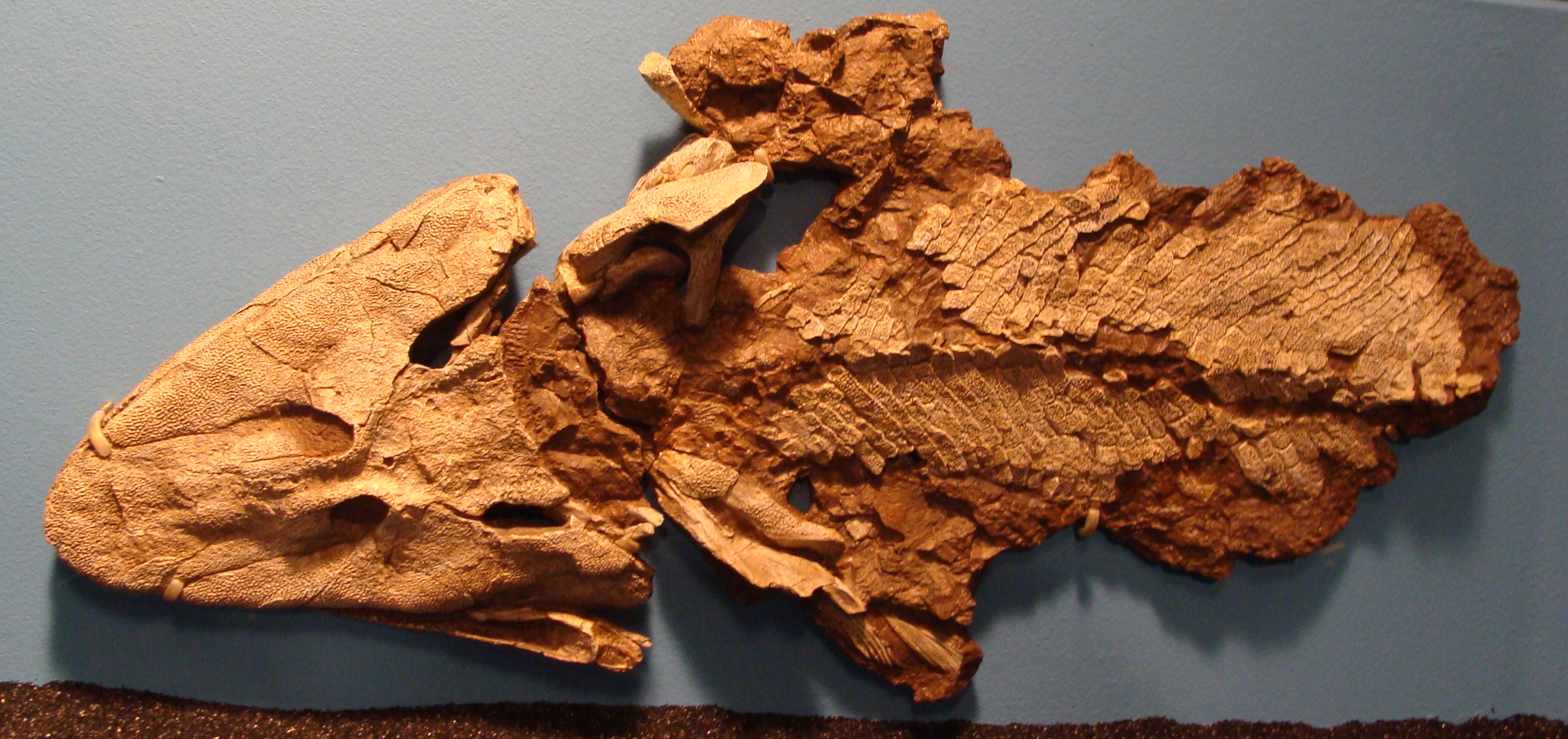
Farish A. Jenkins, Jr. – paleontologist, anatomist, curator, artist, professor, friend – died this past autumn at 72. Harvard's Department of Organismic and Evolutionary Biology has collected obituaries from around the web here. Highlights include Nature, the Boston Globe, and the Harvard Gazette.

Farish A. Jenkins, Jr., 1940-2012 (http://c.o0bc.com/rf/image_539o215/Boston/2011-2020/2012/11/14/Boston.com/Metro/Images/jenkins3.jpg)
Famous for fieldwork (including the co-discovery of Tiktaalik in 2004) and beloved as a teacher, Farish loomed large at Harvard for four decades. There's been a certain pattern of reminiscence: suit-vest and pocket-watch, encyclopedic knowledge and blackboard artistry. He was the Indiana Jones of vertebrate paleontology – a scientist and a comedian, a storyteller and a Marine.

I was lucky enough to take his renowned lecture course on vertebrate paleontology—OEB 139—in the fall of 2007, just a few years after the discovery of Tiktaalik and a few before he first got sick, meaning it was one of the few times he got to draw his discovery in 139. Here are a few stray thoughts that came to me after I heard Farish had died.

Everyone who takes that class remembers it, not just for Farish's lectures—the best in biology—but for all sorts of things, from the insane detail of his chalkboard drawings to the rigor of the exams. My head is still full of mnemonics we made up to memorize metatarsals and Mesozoic teeth.

There was something of Georges Cuvier in his method and presentation, though I'll leave it to others to speculate on the context for his exactitude and epistemic caution (a la Apel's take on the Cuvier-Geoffroy debates). All I mean by it is that, in front of the class or over a museum drawer, Farish could spin a whole life history out of a single tooth.

Farish Jenkins and Jim McCarthy, 1984 (http://blogs.law.harvard.edu/ernstmayrlibrary/files/2012/11/jenkinsmccarthy1984.jpg)
He also had a way of introducing characters—teeth, jaws, necks, legs—in ways that made sense, even to those of us only minoring in biology. In doing so, he combined anatomy, zoology, and palentology so well that I actually had to unlearn some things when I came to study the histories of the various ways of knowing that he stitched together so seamlessly. He told stories; he drew on his pants.

Farish knew I was one of the only non-majors in the class—he knew everyone's name and major on the first day—and we had a series of discussions about how the study of biology and the study of its history linked up. He had a fine-grained sense of both science and its history: anyone who walked the MCZ with Farish will recall his detailed knowledge of both the anatomy and the history of its specimens.

Maybe that's part of being a curator (it is). But something special was going on here, something that made you feel like even if you never went to the field with him, you knew how you'd have to think if you did. Make the wrong assumption, move too quickly, and you'd ruin your chances. There was a care to Farish's thinking that, though a staple of curation and fieldwork, can be hard to translate to the classroom while keeping students excited—and yet he not only managed it, he made it essential to doing well in the course.

Tiktaalik roseae (http://upload.wikimedia.org/wikipedia/commons/f/fa/Tiktaalik_Chicago.JPG)
Sure, he would joke about it. I distinctly remember him making fun of the state of the field—"teeth, teeth, and more teeth"—both before he got into it and even in his own time. But he made stories about finding fossils interesting even before you found out he carried a rifle and had some brushes with polar bears on Ellesmere Island. And he did it by fusing fieldwork and teaching, practice and theory.

It's something I think about a lot—not just for science, but for history, too. You can go through lots of science pedagogy without a real sense of what doing science is like, in either its day-to-day practices or its moments of greatest excitement. The same is true for history: it takes effort to write lectures and design discussions that connect "what's on the test" to what historians argue about in a way that's not glancing, boring, or (my favorite) self-deprecating about archival work and its stakes.

Maybe it's something special about vertebrate paleontology—its history, its practices, its status (and status anxieties)—that helps connect fieldwork to theory to pedagogy. That class was my only exposure to the topic. But it was also something special about Farish, and I'm still thinking about whether whatever that was can be adapted for teaching the history of science (or of anything, for that matter).

Farish Jenkins and Tiktaalik roseae (http://www.news.harvard.edu/gazette/2006/04.06/photos/15-missinglink5-225.jpg)

The archive's no Arctic, but both blend difficult, meticulous searching with moments of discovery and imagination. Farish made million-year-old rodents come alive for non-biologists by emphasizing how hard they were to find; might we do the same with manuscript-based history, even for non-history majors and a wider audience?